Flashing Repairs in Sussex
Damp near a chimney or wall can start at split or lifted flashing, although the visible mark may be further away. We check the adjoining covering and masonry before recommending flashing repairs in Sussex.

Flashing repairs at chimneys and walls
We repair the metalwork and its connection to the adjoining roof covering and masonry. The aim is a sound junction that suits the materials already there.
Flashing protects the line where a roof covering meets a wall, chimney or other upright surface. Wind-driven rain can reach a lifted edge even when the tiles below are sound. A stain inside may appear only when the wind blows from one direction, making the junction easy to miss in calmer weather.
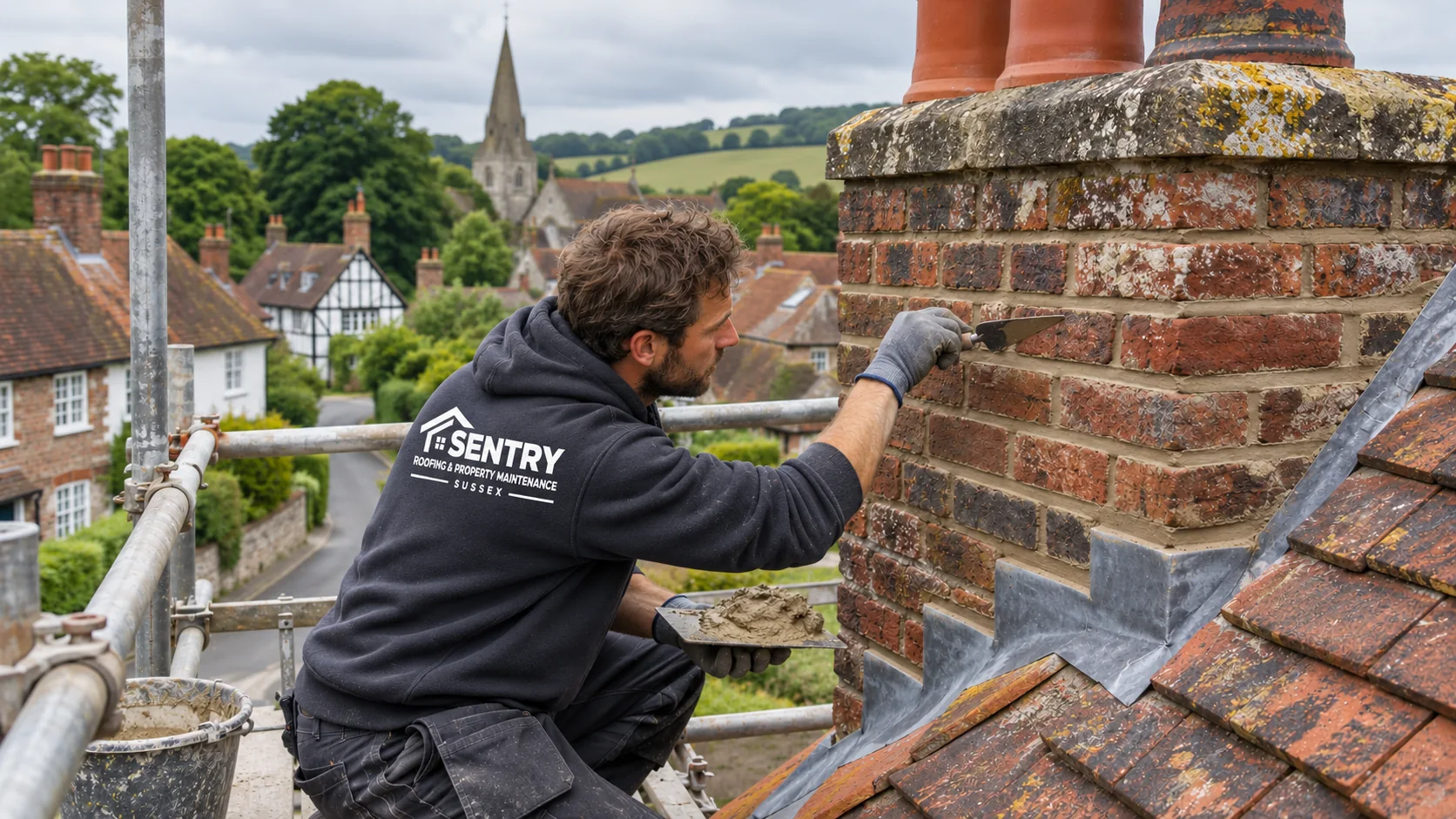
We look at the flashing, its fixings and the materials on both sides of the joint. A local repair may be enough where the surrounding masonry and covering are sound. If the metal has split or adjoining materials have deteriorated, we explain the extent of replacement needed to make the junction weatherproof.
Lead, proprietary flashings and their fixings work differently at roof and wall junctions. A repair should preserve the route that sheds water onto the covering, while allowing for the condition of the masonry or roof material beside it. If water has entered beneath a lifted edge for some time, nearby support may also need checking.
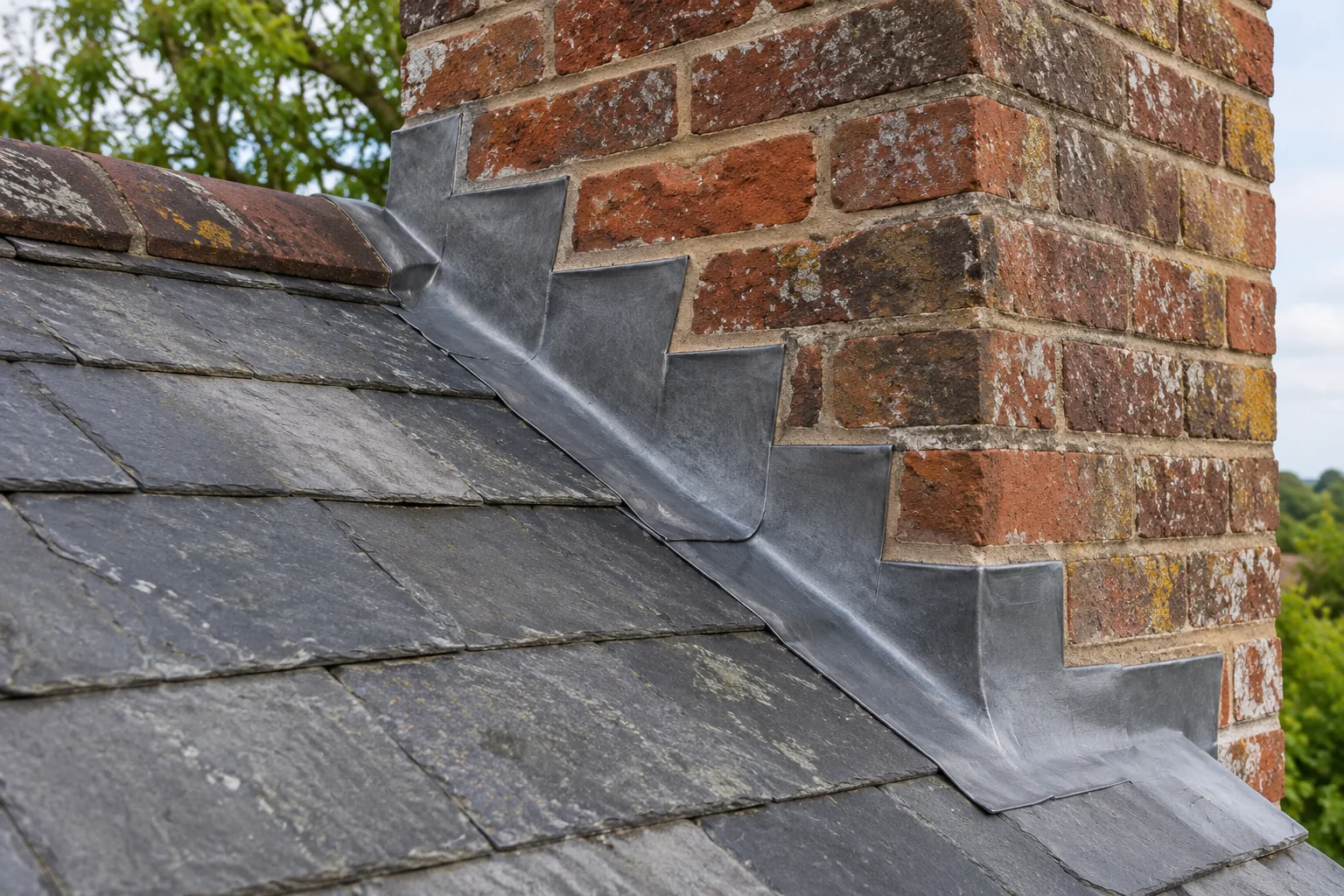
Driven rain finds lifted edges
Lead flashing needs a sound connection to the wall or chimney and the covering below. A small lifted edge can admit water that appears much farther inside.
Explore chimneys & leadworkRelated chimneys & leadwork work
Questions about flashing repairs
Why does rain enter only in certain winds?
Wind direction can drive water into a vulnerable junction that stays dry in calmer rain. That pattern can help narrow the inspection.
Can flashing be repaired without replacing the roof?
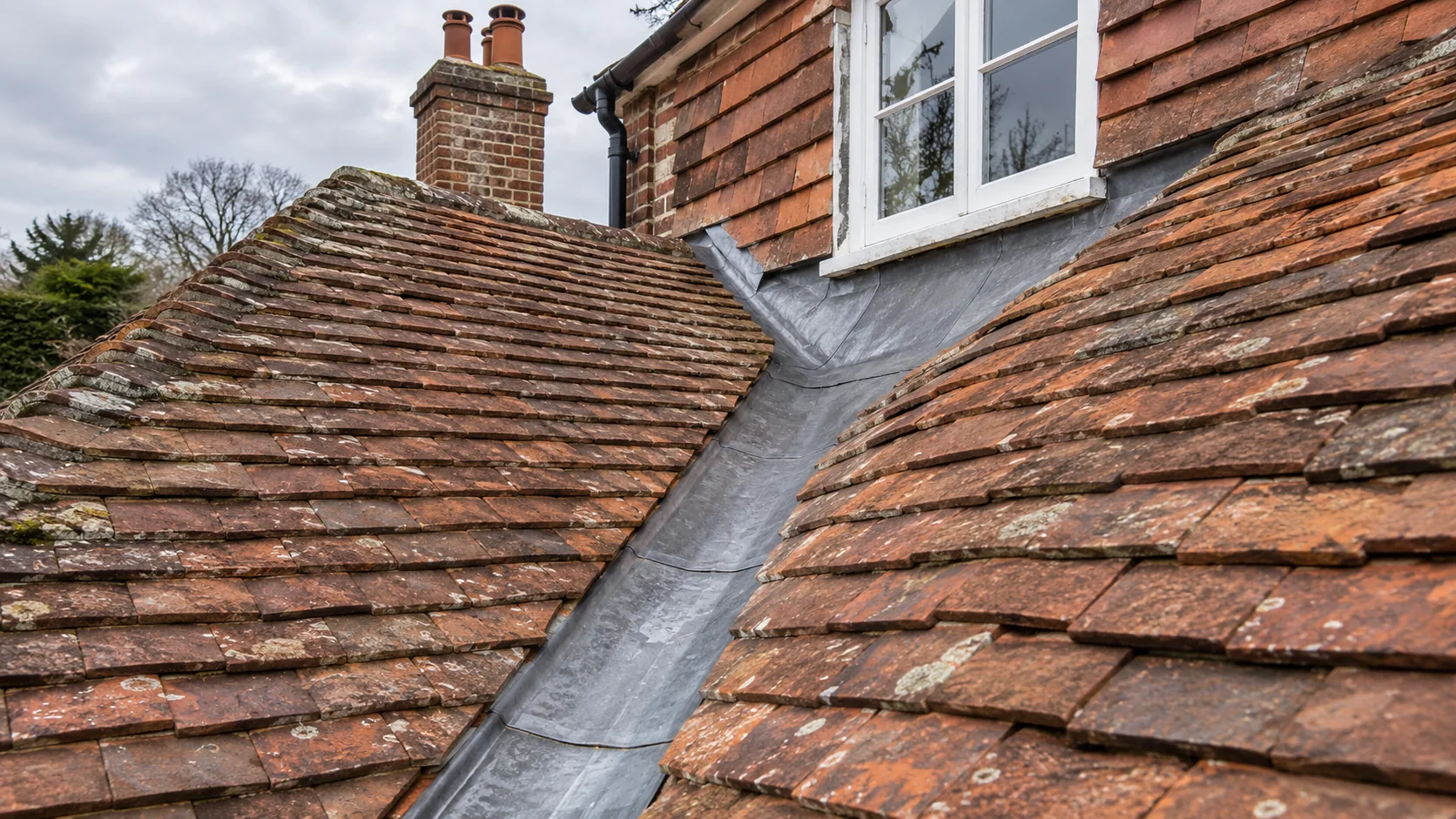
Often it can. The answer depends on the condition of the flashing, nearby tiles or slates and the wall or chimney it meets. Those parts need to work together after the repair.
What are signs of failed roof flashing?
Damp close to a chimney or wall junction, lifted metal edges, gaps in the mortar chase or staining after wind-driven rain can be clues. The adjacent roof and masonry should also be checked.
Can flashing be replaced without changing the tiles?
Often nearby tiles can be lifted and refitted, but their condition and the junction detail determine the work. Damaged or incompatible adjacent covering may need replacing too.